
Perspectives · Labor Practices and Decent Work
Feeding the Pyramid Builders Was a Project Decision
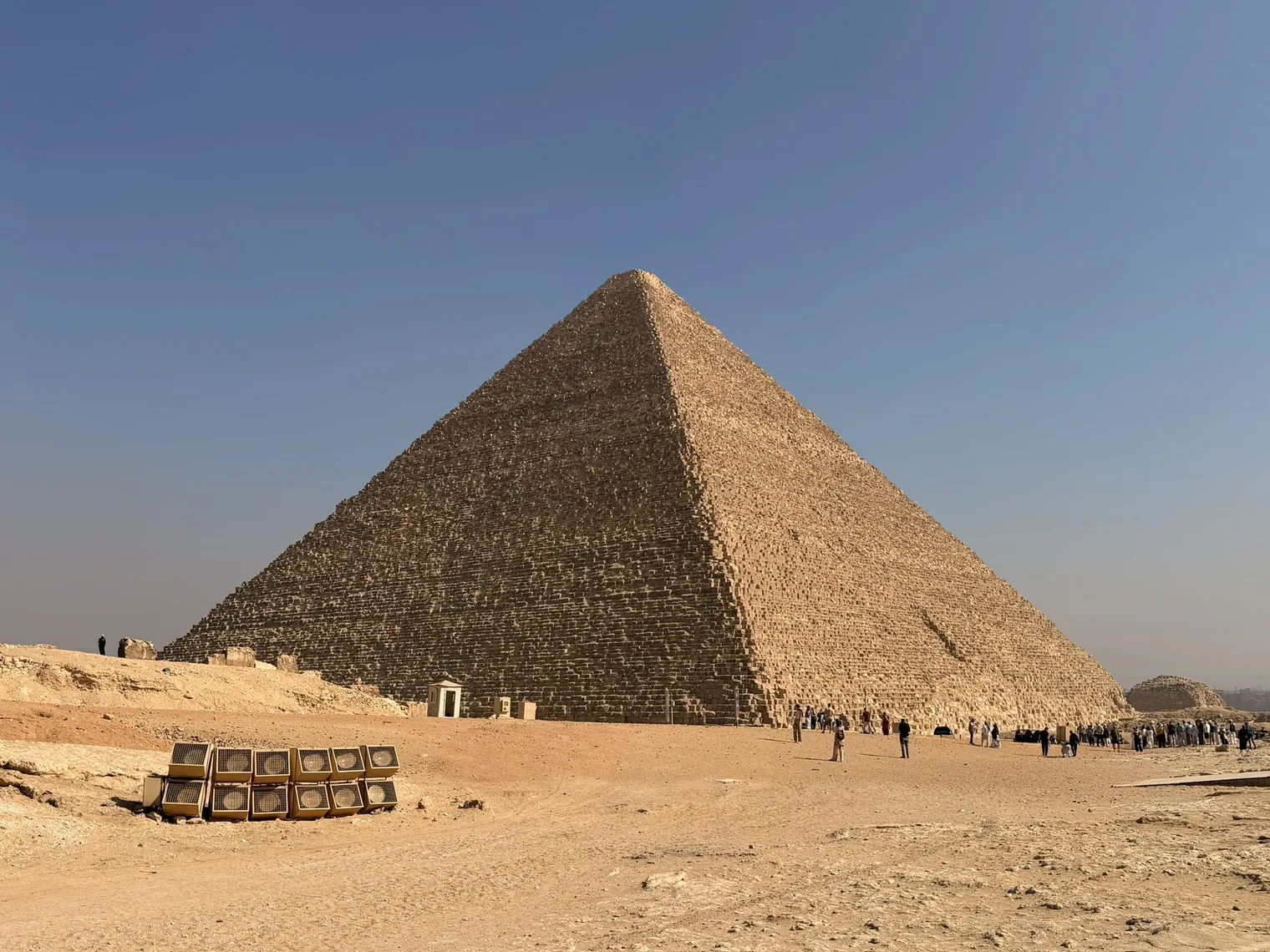
Last week I went to Cairo to support the PMI Leadership Institute Meeting for the Middle East and North Africa region. I had the privilege of meeting chapter leaders and volunteers from 17 countries. The time they give to the profession is incredible.
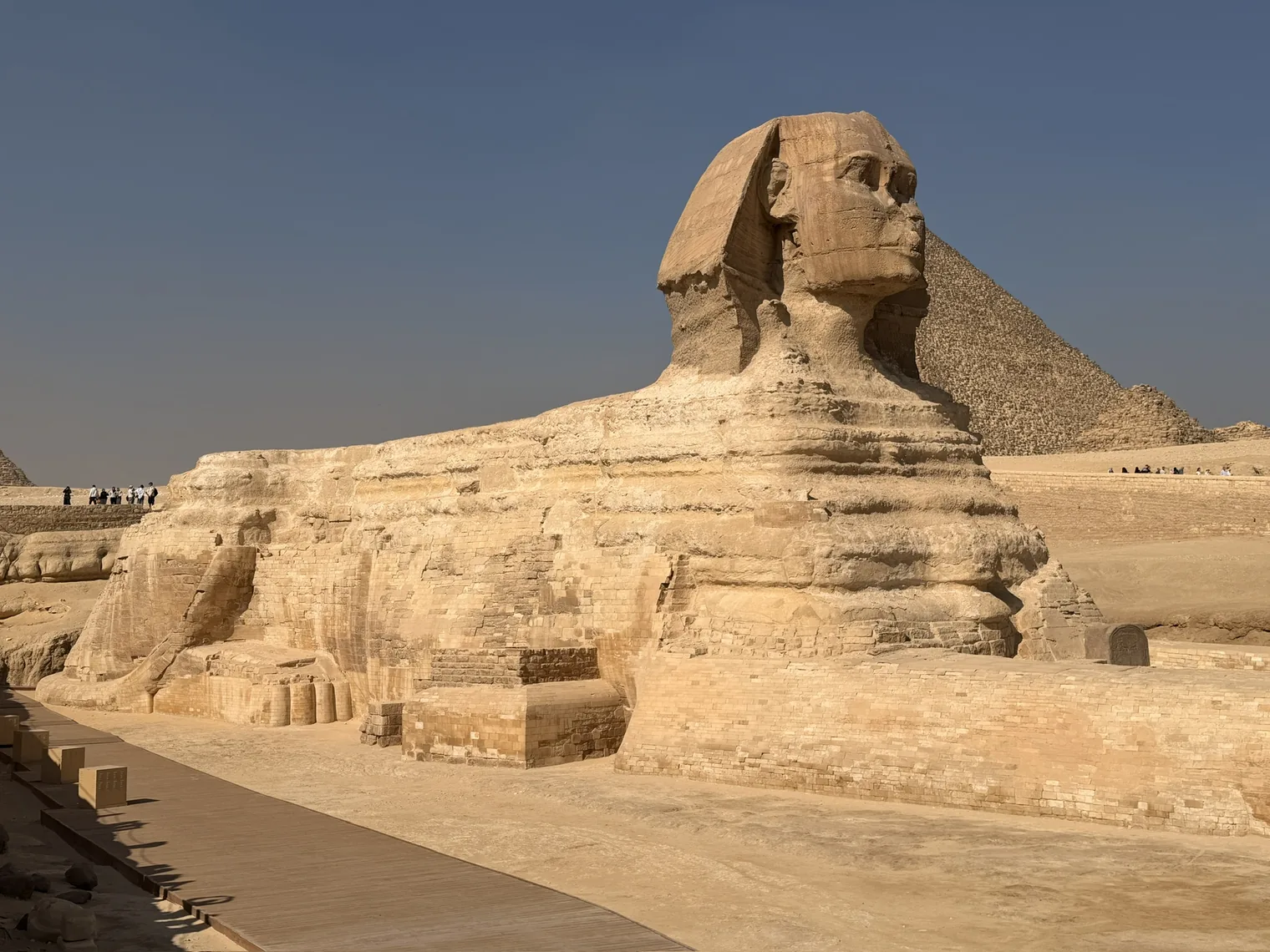
My wife and I reached our hotel at 3 a.m. At 8 a.m. we met a guide to see the pyramids of Giza, which have been on my bucket list for a long time, and the Grand Egyptian Museum on the same day.
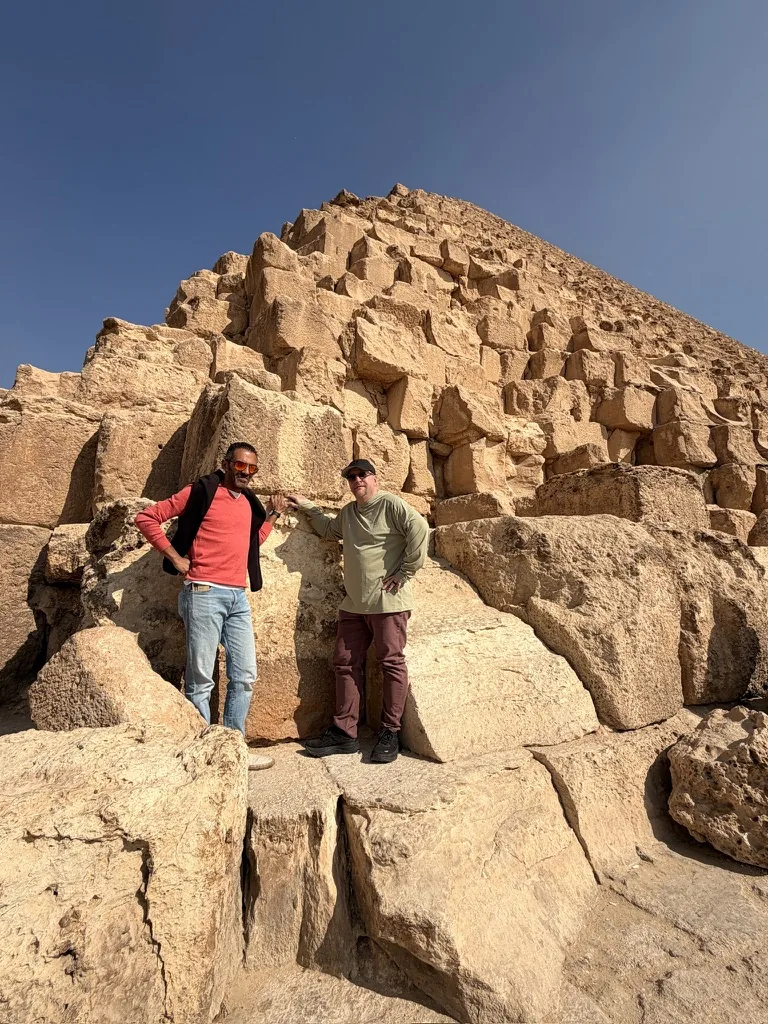
At the site I was told that if I touched the pyramid, it would pull all the negativity from my life. I told them they would need a bigger pyramid. We all laughed.
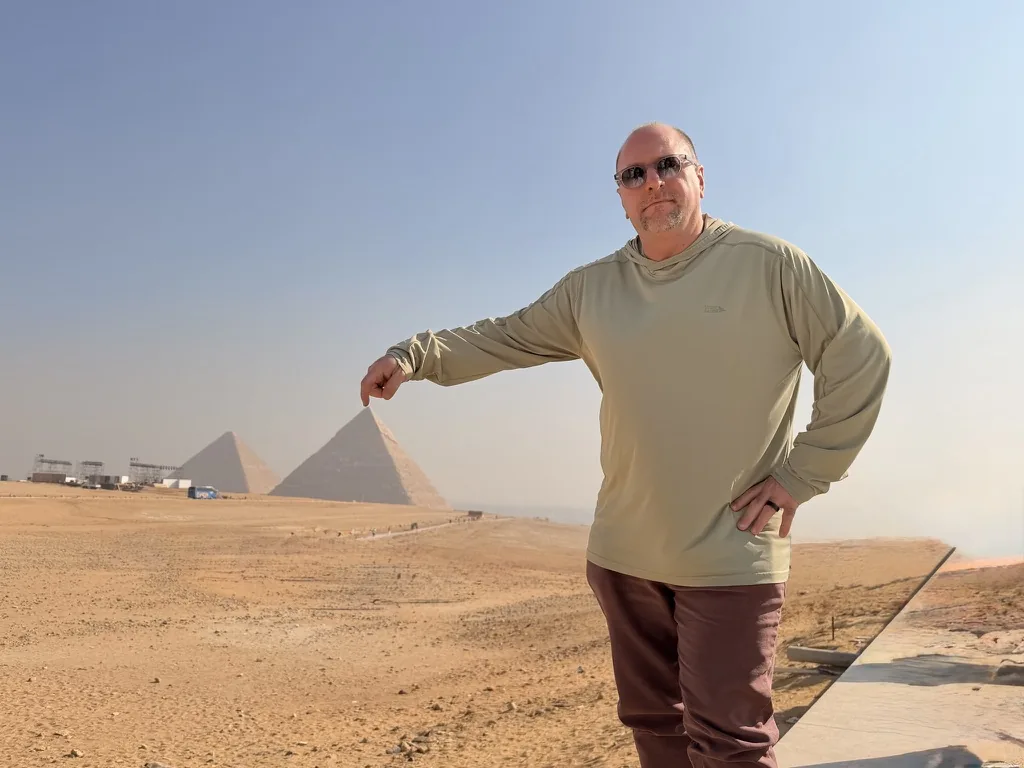
I have used the pyramids for years as an example in the history of projects. I have always explained that slaves or indentured servants built them. Our guide told the group otherwise. The guide said the builders were paid, fed and housed, and that burial near the pyramids was an honor given to them. I checked that account against the excavation record before repeating it.
I have been getting this wrong for years. It is not as black and white as I taught it. The guide's version needs one correction as well, and that correction is the part I find most useful as someone who works on how projects are governed.
The excavation record supports the guide on food, housing and burial
In 1988 the archaeologist Mark Lehner and his team at Ancient Egypt Research Associates (AERA) began excavating a settlement about 400 meters south of the Sphinx. The site is called Heit el-Ghurab. The crown built it as the base for the pyramid workforce. The team found bakeries with bread pots in three standard sizes, areas for processing fish, and long galleries that Lehner reads as barracks for a rotating force of 1,600 to 2,000 workers.1, 2
Richard Redding, AERA's animal bone specialist, estimated the meat supply from the bones left on the site. His figure is more than 4,000 pounds of cattle, sheep and goat slaughtered on an average day, about 11 cattle and 37 sheep or goats, for a workforce of roughly 10,000 during the building of the third pyramid, Menkaure's. Overseers ate most of the beef. The gangs in the galleries ate mostly sheep and goat. Redding's reading is that these workers probably ate better at Giza than in their home villages.3
The cemetery came to light in 1990, when a tourist's horse stumbled on a mud brick wall above the town. The Egyptian archaeologist Zahi Hawass excavated it. The lower part holds ordinary workers. The upper part holds artisans and overseers, with titles such as "overseer of the side of the pyramid." The graves held jars for bread and beer. Most broken bones in the skeletons had healed in good alignment, which indicates that someone set them with splints. When more tombs were announced in January 2010, Hawass made the argument the guide repeated to us: slaves would not have been given tombs beside the king's.4
Hawass also gives a caution. A royal seal found in the cemetery suggests that much of it dates a few generations after the Giza pyramids, so the graves do not all belong to the crews who built the Great Pyramid.4
A written record arrived in 2013. A French team led by Pierre Tallet found papyrus logbooks at Wadi al-Jarf on the Red Sea coast, the oldest inscribed papyri known. An inspector named Merer kept one of them. He logged his crew's work in half-day entries as they moved limestone by boat from the Tura quarries to Giza in the last years of King Khufu's reign. The papyri describe laborers at the harbor supplied with meat, poultry, fish and beer.5
"Paid" needs a correction: the work was an obligation, compensated in rations
Egypt had no coinage when the pyramids were built. Compensation came as rations: bread, beer, meat and fish. Most Egyptologists also describe the labor as an obligation. Lehner's account is that everyone in that society owed service to someone above them, up to the highest officials, and that ordinary workers were rotated through royal projects to meet it. He has said that everybody appears to have owed a labor tax and that he does not know how much of it was coerced.2
Egypt did hold slaves in other settings. The work at Giza was also hard on the body. The excavation supervisor for the 2010 tombs reported arthritis and damaged lower vertebrae in the skeletons.4
The accurate statement is narrower than the one I heard on the plateau. The builders were Egyptians, organized in named gangs, working under a labor obligation to the state. The state housed them, fed them, treated their injuries and buried them near the king. I would not call that free wage labor. The evidence does not support calling it slavery.
Each of those conditions was authorized above the work site
The meat supply shows the scale of what had to be decided. Redding calculated that it required standing herds of about 21,900 cattle and 54,750 sheep and goats, about 3,650 herders, and grazing and farm land equal to roughly 5 percent of the Nile Delta.3 No gang leader could commit that, and neither could anyone else on the plateau. These were allocations of land, herds, grain and river transport across a country, and they had to be in place before the workforce arrived each season.
The town was built by the crown. According to Hawass, the workers served in three-month shifts.4 Fractures were set. A burial ground was opened beside the royal tombs. Someone with authority over the whole project decided the workforce would be provisioned to this standard and then committed the resources.
The papyri give one name at that level. Merer reported to Ankhhaf, Khufu's half-brother, who oversaw part of the Great Pyramid's construction.5 Merer's job was delivery, and his logbook is a delivery record: stone loaded, days sailed, stone unloaded. What his crew ate was settled above him.
Feeding 10,000 workers took herds that needed about 5 percent of the Nile Delta. Only the people who authorized the project could commit that land.
I do not read this as kindness. Redding's explanation is practical. Hauling stone takes about 45 to 50 grams of protein a day, and good food and medical care made the work easier to staff.3 The Great Pyramid took about two decades to build. A workforce that broke down in the third year could not have finished it. The people who authorized the project treated the condition of the workforce as something delivery depended on, and they funded it.
The project left the state with more capacity than it started with
Lehner and other Egyptologists describe pyramid building as a step in building the Egyptian state, because a project of that size required a national system of administration.6 By the end of Khufu's reign there was a harbor on the Red Sea, boat crews keeping written daily logs, quarries at Tura feeding a river transport route, and a food supply chain that reached from Delta pastures to Giza.
At GPM we define regeneration as a measurable increase in system capacity beyond the baseline. On administrative and logistical capacity, the record at Giza shows that increase. On the workers the record is mixed, and I think it should be stated that way. They ate better than at home, their fractures were set and they were buried with honor. They also served under compulsion, and their spines show what the work cost them.
The same decisions sit with project sponsors now
The PMI® GPM® Guide to Responsible Project Sponsorship, a PMI-GPM publication, defines the sponsor through four decisions: authorize, continue, change and stop. Workforce conditions belong to the first one. Housing, food, medical care, rotation and what happens when someone is injured are either costed or left out when the project is authorized. By the time a project manager receives the budget, the answer is mostly fixed. The PMI® GPM® P5™ Standard lists labor practices and health and safety among the impacts a project is assessed on, which gives a sponsor a place to see them before signing.
A common arrangement on large projects now is to pass these conditions down to contractors and their subcontractors, several levels below anyone who can change the budget. At Giza they were held at the level of the king's half-brother.
I take three practices from the Giza record. Set the workforce conditions at authorization and commit the resources for them in the same decision. Name the person above the delivery level who is accountable for them, as Ankhhaf is named in Merer's logbook. Review at each gate whether those conditions still hold, with the same weight given to schedule and cost.
The guide's account holds up with that one correction, and I will teach the pyramids differently from now on. The sources are listed below for anyone who wants to check them.
Download the guide
The PMI® GPM® Guide to Responsible Project Sponsorship
A PMI-GPM publication on decision rights, tolerances, gate criteria and the sponsor's accountability from authorization to benefits. Available at no cost from gpm.org/sponsor.
1 Ancient Egypt Research Associates (AERA), Lost City of the Pyramids (Heit el-Ghurab) excavations, directed by Mark Lehner. aeraweb.org
2 Jonathan Shaw, "Who Built the Pyramids?", Harvard Magazine, July 2003. harvardmagazine.com. Mark Lehner, "Labor and the Pyramids: The Heit el-Ghurab 'Workers Town' at Giza," in Labor in the Ancient World, 2015. researchgate.net
3 "Giza Secret Revealed: How 10,000 Pyramid Builders Got Fed," Live Science, 2013, reporting Richard Redding's faunal study for AERA. livescience.com
4 Associated Press, "Egypt discovers workers' tombs near pyramids," January 2010. nbcnews.com. "Egypt says Jewish slaves didn't build pyramids," Christian Science Monitor, January 11, 2010. csmonitor.com. Cemetery layout, tomb titles and the dating caution follow Zahi Hawass's own account of the builders' cemetery, as summarized in a fact check published by Ancient Origins. ancient-origins.net
5 "The World's Oldest Papyrus and What It Can Tell Us About the Great Pyramids," Smithsonian Magazine, October 2015. smithsonianmag.com. Pierre Tallet, Les papyrus de la mer Rouge I, Institut français d'archéologie orientale, 2017.
6 "35 Who Made a Difference: Mark Lehner," Smithsonian Magazine. smithsonianmag.com
7 The PMI® GPM® Guide to Responsible Project Sponsorship. Project Management Institute and GPM Global. gpm.org/sponsor